

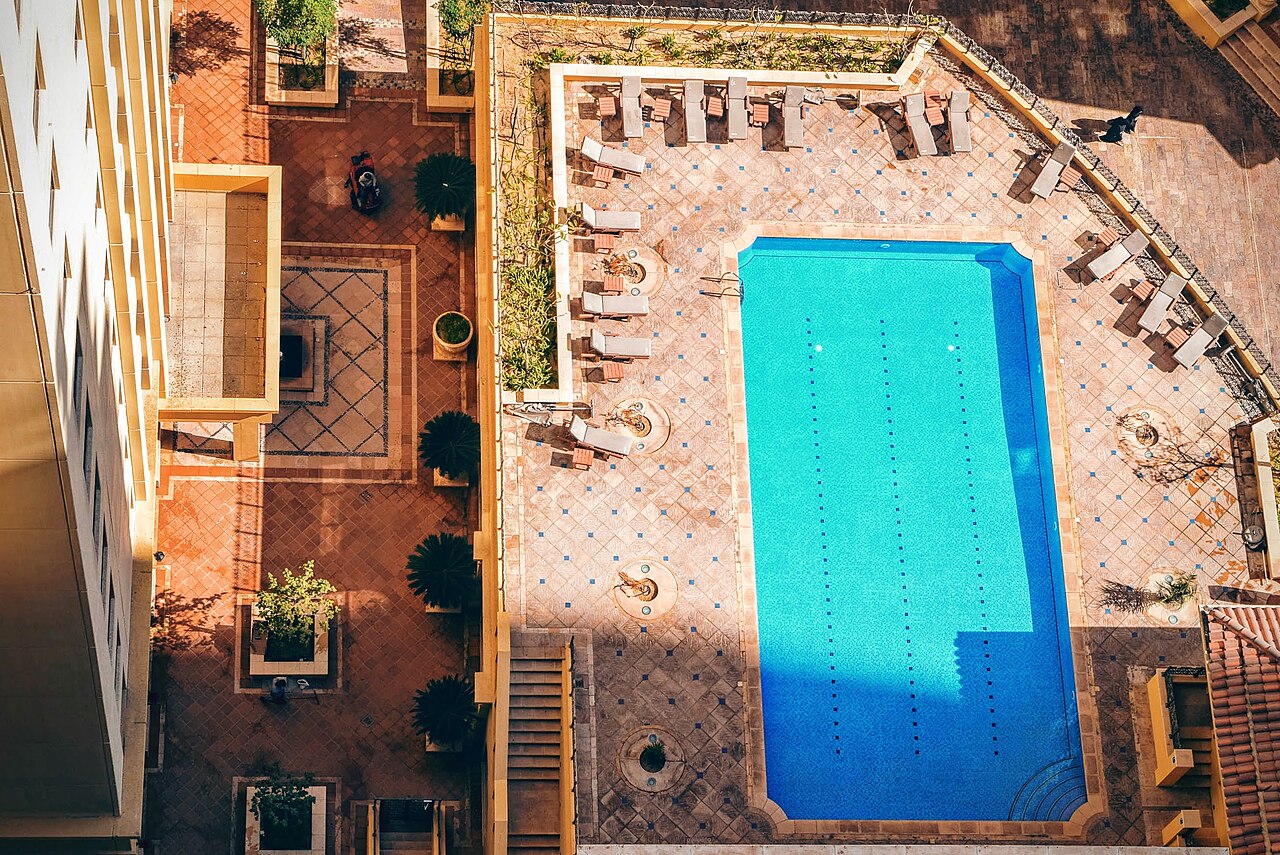
Photos of swim-up rooms sell a simple picture: open your patio door and step straight into the water. The reality varies by resort. Some swim-up rooms open onto water shared with a handful of neighbors, while others line a lagoon connected to the main pool. This starter guide explains what the category actually means, how it compares with pool-access and private-pool rooms and what to verify before paying extra.
What a Swim-Up Room Really Is
A swim-up room is a hotel or resort room, almost always on the ground floor, with direct access to a swimming pool from a private patio or terrace. You walk out the door and into the water within a few steps, though some layouts use a short set of stairs instead. Either way, you skip hallways, elevators and the lobby, which matters when you are wet or just want to pop back for sunscreen.
Most swim-up terraces come furnished with sun loungers and a small table. Some resorts position these rooms near a swim-up bar, so you can order a drink without leaving the water. The pool itself can be shared by many rooms, shared by only a few or reserved for your room alone, so one label can describe very different setups. Our overview of hotel room types shows where categories like this fit in the broader lineup.
A warning worth repeating: resorts and booking sites do not use these labels identically. One property’s swim-up may match another’s swim-out or pool access. Treat the category name as a starting point and read the room description line by line.
Swim-Up vs. Pool-Access vs. Private Pool Rooms
Here is how the common categories differ.
| Room type | What you get | Fits best |
|---|---|---|
| Swim-up | Direct entry from your terrace into a pool, usually shared with other rooms | Guests who swim often and want no trek to the main pool |
| Pool access | A room positioned near a pool; direct terrace access is often not included | Travelers who want convenience without the premium |
| Private pool | A pool next to your suite for your exclusive use, typically big enough to swim in | Privacy-focused guests and couples |
| Plunge pool | A compact pool on your terrace, often around the size of a large hot tub, too small for swimming laps | Guests who want to cool off, not swim |
The key distinction is who else can use the water. A private pool is intended only for the occupants of that room. A swim-up pool may look private from your terrace, but the water is often communal, and neighboring guests can swim directly past your patio.
Shared Lagoon Pools: Privacy and Access Questions to Ask
Many swim-up categories open onto a shared lagoon or river-style pool that connects several suites. In semi-private versions, the pool serves a small block of rooms, often two to six, which keeps it quieter than the main pool. Other layouts link to the resort’s larger pool system, so any guest can float by your terrace.
Ask these questions before booking:
- Does the terrace open directly into the pool, or is there a walkway, gate or railing in between?
- How many rooms share this section of water?
- Does the pool connect to the main resort pool?
- What are the pool hours and any restrictions?
Also remember that a private pool does not always mean visually private. A plunge pool can sit below neighboring balconies or face a walkway. If sightlines matter to you, ask for a site plan or recent photos showing the terrace in relation to other buildings.
Pro tip: Ask the resort to confirm the room category and pool arrangement in writing before you pay. A short email stating that the terrace has direct access to a semi-private pool shared with a set number of rooms beats any category name on a booking page.
Depth, Kids’ Rules and Safety Details
Immediate water access changes the safety picture for families. Toddlers and young children need constant supervision when a pool sits steps from your door, and a ground-floor room with direct water entry is harder to manage than one with a barrier between the patio and the pool. Ask about the depth at the terrace entry point, whether children are restricted from certain pools and what the posted pool rules cover.
Water quality questions are fair game too. The CDC reports that pool chemical injuries account for as many as 5,200 emergency room visits in the United States each year, so a resort’s chemical handling practices matter. Clear water and attentive staff are good signs. In indoor pool areas, a strong chlorine smell actually signals chloramines building up in the air, which points to a ventilation problem rather than clean water. A quick rinse-off shower before swimming removes much of the sweat and body residue that helps form chloramines, so use it, and get the kids to do the same.
Noise, Privacy and Maintenance Trade-Offs
The trade-offs cluster around the ground floor. Rooms near pool decks pick up ambient noise, and swim-up terraces sit on natural foot-traffic routes for guests paddling past or heading to a nearby bar. Entertainment schedules add to the noise after dark. Higher floors generally deliver better views and less pool-deck noise, which is one reason they often cost more.
Privacy cuts both ways. Guests float past your terrace all day, and your outdoor furniture is in view of anyone in the water. Light sleepers and privacy-focused travelers are often happier in a quiet upper-floor room than on a busy poolside terrace. If you book the swim-up anyway, ask when the pool section is cleaned and serviced so an early-morning machine does not wake you.
Whether the Price Premium Is Worth It for You
Swim-up categories carry a meaningful supplement over standard rooms. The math is simple: multiply the nightly difference by your total nights. A hypothetical $40-per-night supplement adds $280 to a seven-night stay; that example is illustrative, not a quoted rate, so check the real figure in your own offer. Our article on resort fees and other hotel charges covers other add-ons that can inflate the final bill.
Then match that total to how you actually travel. Couples who plan to swim several times a day get real value from confirmed direct access, because the convenience justifies the cost. Guests who split time between the beach, excursions and restaurants may use the terrace pool rarely, and a standard or pool-view room costs much less. Frequent swimmers should also note that plunge pools are generally too small for real swimming, so a swim-up layout is usually the more useful choice if laps matter.
If you want water access without sharing, a private pool room delivers more seclusion, often at a higher price. Your choice comes down to what you want from the water: more room to actually swim, or your own smaller pool with no neighbors in it.
Booking Tips for the Best Placement
Because swim-up categories make up a small slice of a resort’s rooms, book as early as your dates allow. Then work through this checklist:
- Go through the room description word by word and note any wording that spells out whether the pool is private, shared with other rooms or reachable straight from the terrace.
- Request written confirmation of the category, plus a recent photo or site plan showing the terrace-to-water access.
- Confirm pool hours and any restrictions, such as adult-only sections or quiet hours.
- If you want a specific spot, such as an end unit away from the bar, ask when you reserve. Our guide to polite room requests explains how to ask in a way front desks respond to.
- Scan recent guest reviews for mentions of the swim-up section. Our guide to reading hotel reviews helps you pull useful details from mixed feedback.
Start small: pick two or three resorts you like, and email each one the four questions in the lagoon section above about its swim-up category before you pay any supplement.
At a glance
- A swim-up room is a ground-floor room with direct pool access from its terrace, but the water is usually shared with other rooms.
- In semi-private setups the pool often serves only two to six rooms, while other swim-up layouts connect to the main resort pool.
- A private pool is for your room alone; a plunge pool is compact, roughly hot-tub size, and too small for swimming laps.
- Weigh the nightly supplement against your total nights; a hypothetical $40 nightly difference adds $280 over a seven-night stay.
- Before paying, get written confirmation of the room category, pool hours, sharing arrangement and terrace-to-water access.
Frequently asked questions
Is a swim-up hotel room private?
Usually not fully. You get a private terrace with direct access, but the water is often shared with neighboring rooms, sometimes many of them. Ask how many rooms use the same pool section before booking.
What is the difference between swim-up and pool-access rooms?
Swim-up means you step from your terrace straight into the water. A pool-access room is simply located near a pool, and direct access from the terrace is often not included.
Are swim-up rooms safe for young children?
They require extra caution, since the pool sits steps from your door. Ask about the depth at the entry point, the posted pool rules and any restrictions on children before you book.
Is the swim-up upgrade worth the extra cost?
It depends on how much you will use it. Frequent swimmers and couples who spend their days in the water get the most value, while guests out on excursions may rarely use the terrace pool.